
Bats Under Barrel Tile Roofs in Florida: Signs and the Law
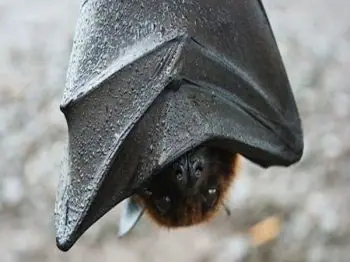
The short answer: bats under barrel tiles are often Brazilian free-tailed bats, which UF/IFAS says live throughout Florida. Look for stains, droppings and bats leaving at dusk. Without a permit they can only be removed by exclusion, from August 15 to April 15, unless they're Florida bonneted bats, which can't be excluded at all. Call (844) 264-6254.
Why bats choose tile roofs
UF/IFAS says Brazilian free-tailed bats are found throughout Florida and that here they roost mainly in man-made structures: attics, sheds, under bridges and under barrel roof tiles (UF/IFAS). UF/IFAS notes the rare Florida bonneted bat, found in central and south Florida as far north as Polk County, also roosts under barrel tiles, so the species has to be identified first. The curved tiles leave open channels at the eaves and ridges, and FWC notes bats can get into any hole about ¾ inch across or any crevice ⅜ inch wide (FWC).
Signs of bats under the tiles
- Bats leaving at dusk. FWC says you may see them going in or out at dawn or dusk. Watch the tile ends at sunset.
- Brown stains at the openings. FWC describes a slight brown discoloration from body oils and dirt.
- Droppings on the ground, walls, windowsills or a lanai screen below. FWC says piles of black, dry guano usually collect under the main exit.
- A musky smell. FWC says the odor usually comes from the free-tails' scent gland, not the guano (FWC).
- Squeaking just before sunset. FWC says you can often hear a colony shortly before it leaves for the night. Unlike rodents, UF/IFAS notes, bats don't gnaw or chatter.
Our posts on common bat entry points and how bats get into homes cover other spots to check.
What the law allows
- No exclusion without an FWC permit from April 16 to August 14, the maternity season, when FWC says it's illegal to evict or exclude bats (FWC).
- Four nights minimum. FWC's minimum is four nights for one-way devices, and only when lows are forecast at 50°F or above.
- No poison, relocation or fumigants. FWC says they're illegal on bats in Florida and don't work.
- The Florida bonneted bat can't be excluded at any time of year, UF/IFAS says. It's rare and lives in south and central Florida (UF/IFAS).
More detail in our guides to Florida bat laws and bat maternity season.
Why you can't just seal the tiles
Closing the tile ends while bats are inside traps them. FWC warns that bats sealed into a building die there, and the decay can cause strong odors and draw pests (FWC). With exclusion, one-way devices go on the openings the bats use, the bats leave over several nights, and only then are the tile ends and other gaps closed.
Health and safety
- Don't touch a bat. FWC says never handle one bare-handed; it may bite to protect itself.
- Rabies is present in Florida bats. Florida DOH confirmed 30 rabid bats in 2024 and 42 in 2025 among animals that may have exposed people or pets, plus a few more found through surveillance testing (DOH 2024, DOH 2025). If anyone may have touched a bat, call your county health department before releasing it.
- Guano: FWC says histoplasmosis from bat guano in a building has never been reported in Florida, but the CDC advises wearing a respirator around guano in tight spaces. See our bat guano cleanup guide.
- Skip ultrasonic devices. UF/IFAS says they don't repel bats.
Next steps: bat removal, bats in the attic and bat removal in Tampa.