SNAKE REMOVAL
Snake Removal in Central Florida
A snake in the house, garage or lanai? Keep your distance and call. We remove it safely, find how it got in and close the gap.
- Know the venomous four
- Entry points sealed
- Same-Day Service
- Free Inspection
- 4.7 Google Rating
- Same-Day Service
- Free Inspection
- Sealed for Good
What should I do about a snake in my house in Florida?
Keep children and pets away, watch where it goes from a safe distance, and don't try to catch or kill it. Only 6 of Florida's 50 snake species are venomous, but a bite from any snake hurts. Call (844) 264-6254 and we'll remove it and close the way in.
- 6 of 50 venomous
- Don't catch or kill
- Snakes follow rodents
- Repellents don't work
Venomous snakes
The venomous snakes you may meet in Central Florida
FWC's guide to Florida's venomous snakes lists six species. Three are found in every Florida county, and the coral snake lives throughout the state. Learn them, then leave identification of any snake you're unsure about to us.
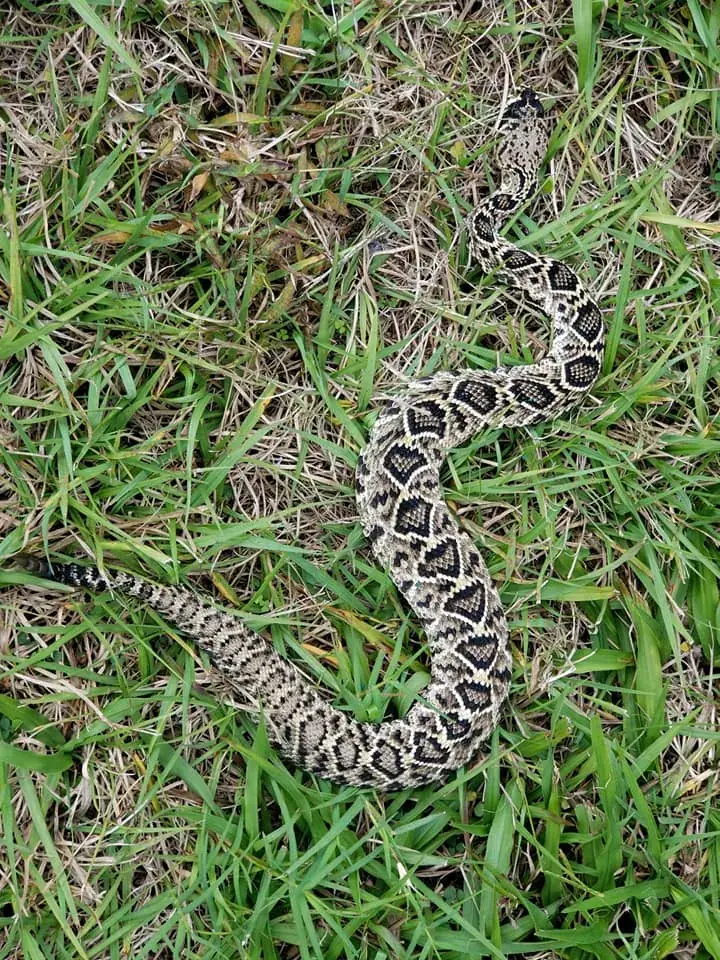
Eastern diamondback rattlesnake
Yellow-bordered diamonds down the back, a rattle and a head much wider than the neck. A large, venomous native snake, found in every county, often in palmetto flatlands, pine woods and brushy fields.
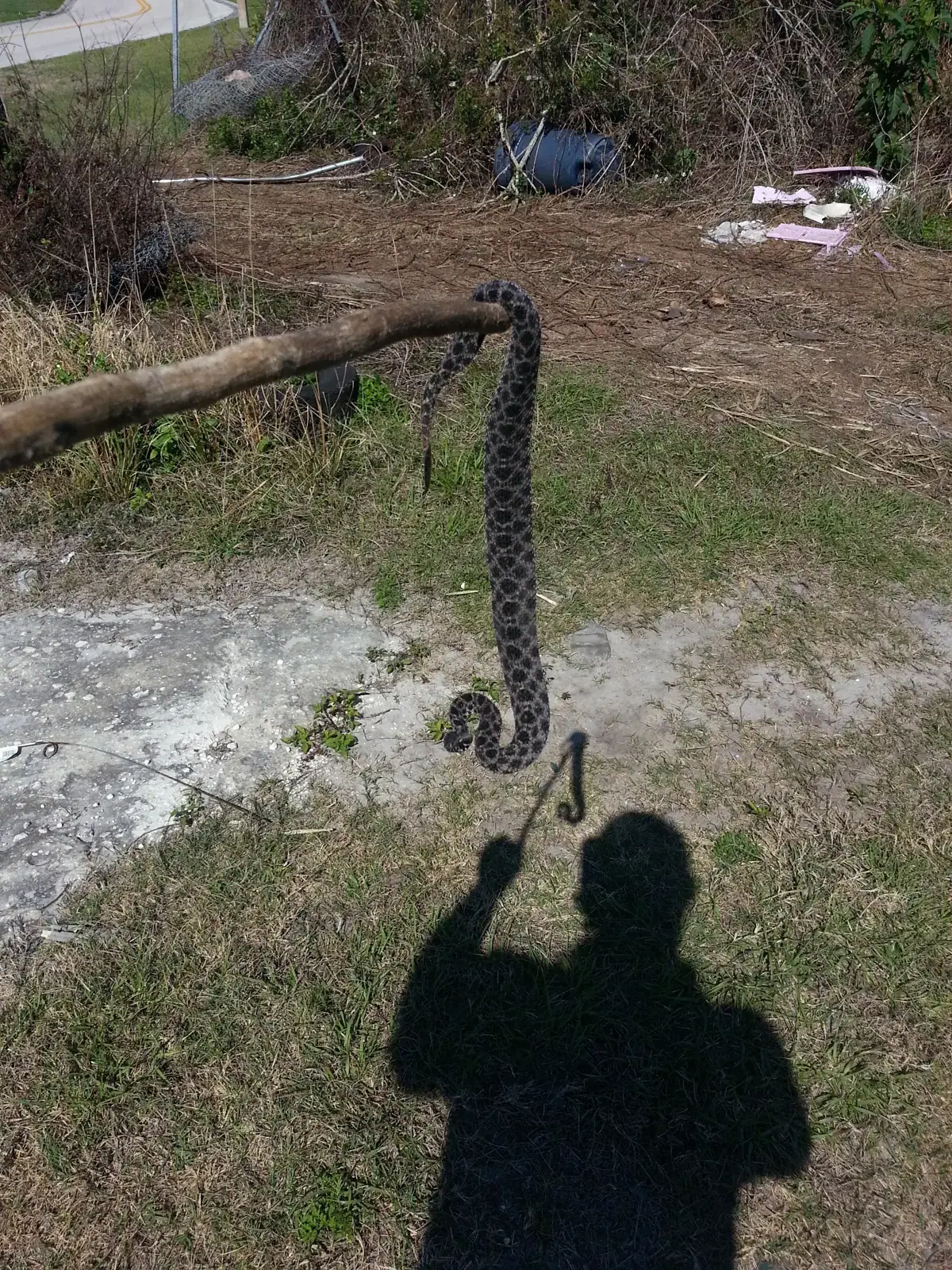
Dusky pygmy rattlesnake
Small, stout and gray, also called the ground rattler. Its tiny rattle sounds like a buzzing insect and can only be heard a few feet away. Common in every county.
Cottonmouth
A heavy-bodied pit viper with no rattle, olive-brown to black, usually around three feet long. Lives near water: stream banks, swamps, lake edges and marshes. Found in every county.
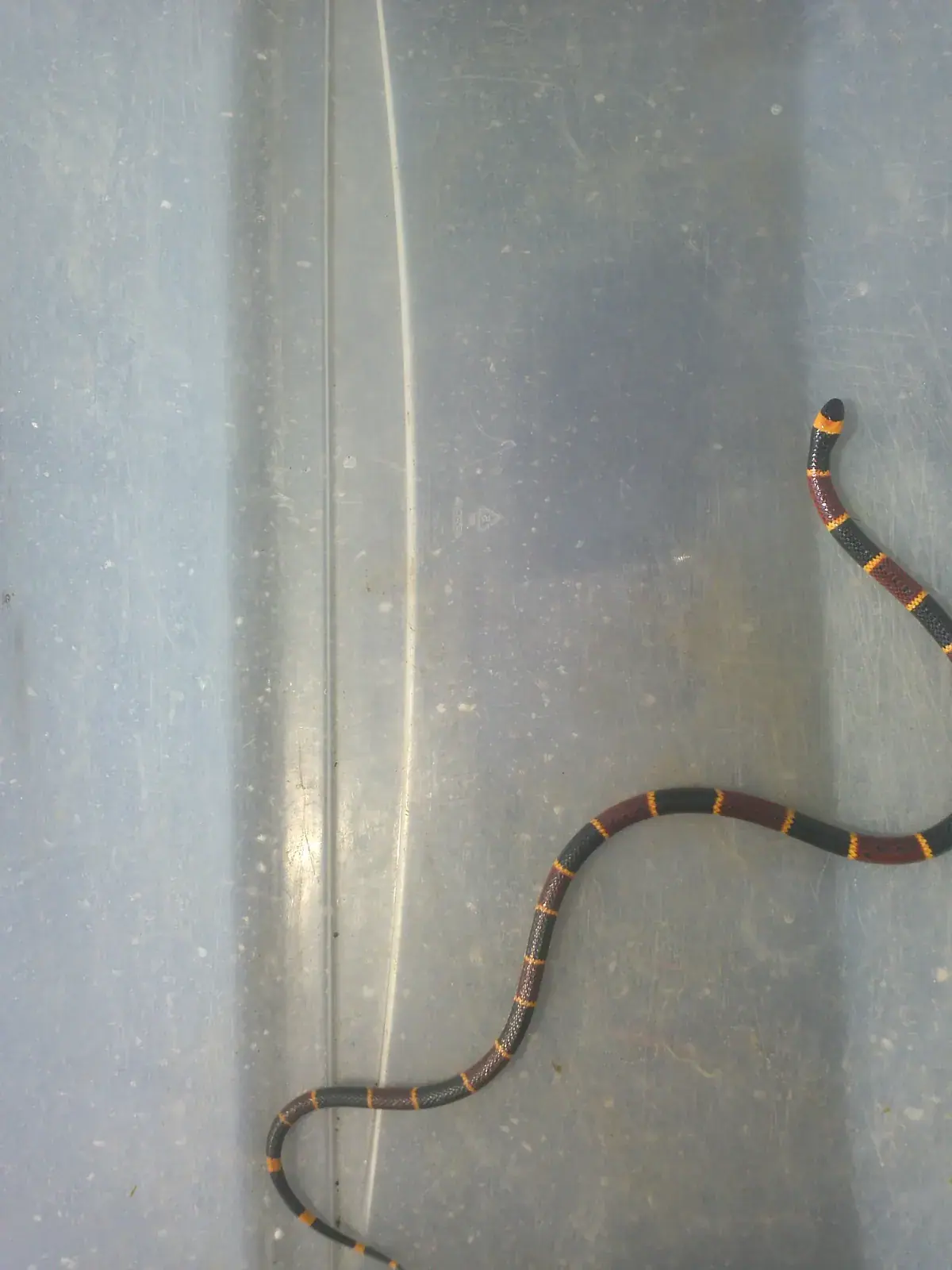
Eastern coral snake
Red, yellow and black rings with a black nose. On a coral snake the red rings touch the yellow; on the harmless scarlet kingsnake, red touches black. Found throughout Florida in leaf litter, logs and brush piles.
The other two, the timber (canebrake) rattlesnake and the copperhead, are north Florida snakes. FWC's guide places the canebrake mainly in northern Florida and the copperhead in a few northwest counties.
Why it matters
Why snakes come to your house
Snakes go where the food is. FWC says seeing snakes often around a house or shed may mean rodents are there, and UF/IFAS notes that rat snakes move into attics, garages and sheds when rodents are present and leave once the rodents are gone.
- Rodents. Rats in the attic or mice in the garage are a dinner bell. If you keep finding snakes, the real job may be rat removal.
- Cover. Brush piles, stacked lumber, firewood on the ground, overgrown shrubs and clutter give snakes places to hide.
- Water and frogs. A backyard pond full of frogs draws the snakes that eat them.
- Easy ways in. UF/IFAS warns some snakes can fit through an opening no bigger than a pencil: gaps under doors, worn garage door seals, pet doors, holes around pipes and open pool-cage drain pipes.
Most snakes around Florida homes are harmless and eat pests. FWC's advice is to leave a snake outdoors alone. The problem is one inside the house, the garage or the pool cage.
How we remove snakes
What happens when you call
- 1
Tell us what you see
Where the snake is, how big it looks, its colors, and whether it's still in sight. If you can, take a photo from a safe distance. Keep the door to that room closed.
- 2
Safe capture
The technician identifies the snake and removes it with tools made for the job.
- 3
Release or removal
Native snakes are released where Florida rules allow. Protected species, like the eastern indigo snake, are left unharmed.
- 4
Find the way in
We look for the gap the snake used, and for what drew it: rodents, a pond or cover next to the house. Then we close the gaps and tell you what else to change.
Florida rules
Snakes and Florida law
- Some snakes are protected. The eastern indigo snake, a bluish-black, non-venomous snake that can reach eight feet, is a threatened species under the federal Endangered Species Act and Florida rule 68A-27. It shows no aggression when approached. Leave it be.
- Killing a snake is rarely justified. FWC says there's no good reason to kill a snake except in the unlikely case of a venomous snake posing immediate danger to people or pets. Snakes usually bite only when they're handled or provoked.
- Keeping a venomous snake needs state approval. FWC says venomous reptiles may only be possessed with its authorization, so catching one to keep or move is not a do-it-yourself job.
- Snake repellents don't work. UF/IFAS says plainly that the products sold as snake repellents simply do not work.
Read FWC's Living with Snakes and UF/IFAS's guide to preventing encounters with snakes.
Keep them out
Making the house snake-tight
A snake that got in once tells you where the house is open. These are the fixes UF/IFAS recommends, and the ones we look at on every snake call.
- Door sweeps and garage door threshold seals replaced where worn
- Gaps around pipes, wiring and vents sealed; larger openings covered with hardware cloth
- Roof vents and plumbing vent stacks screened
- Crawl space openings fitted with secure doors
- Pool-cage drains and torn screens checked
- Rodent problems found and fixed, so there's nothing to hunt
Cost
What snake removal costs depends on
Urgency and time of day
A snake loose in the living room at night versus one seen in a shed.
Where it is
In plain sight, or hidden in a wall, a cabinet or under an appliance.
The species
Venomous snakes take more care and equipment.
Sealing and rodent work
Closing the gaps, and dealing with the rodents that drew it.
Areas served
Snake removal in 8 counties
From lakefront homes in Polk to pool cages in Pinellas, we remove snakes across central and west Florida.
- Pinellas County
- Clearwater
- Dunedin
- Tarpon Springs
- Hillsborough County
- Brandon
- Plant City
- Lutz
- Carrollwood
- Town 'n' Country
- New Tampa
- Keystone
- Greater Northdale
- New Port Richey
- Land O' Lakes
- Dade City
- Hernando County
- Spring Hill
- Citrus County
- Crystal River
- Lecanto
- Sumter County
- Bushnell
- Ocala
- Dunnellon
- Summerfield
- Lakeland
- Bartow
- St. Petersburg
- Palm Harbor
- Largo
- Pinellas Park
- Tampa
- Riverview
- Odessa
- Westchase
- Citrus Park
- Temple Terrace
- Cheval
- Lake Magdalene
- Pasco County
- Trinity
- Hudson
- Wesley Chapel
- Brooksville
- Weeki Wachee
- Inverness
- Homosassa
- Pine Ridge
- Wildwood
- Marion County
- Belleview
- Silver Springs
- Polk County
- Winter Haven
- Haines City
Reviews
What customers say
- ★★★★★
There's a first time for everything! Somehow a snake made it's way into our office building and chose my office to hang out. I called Pro Wildlife on Sunday and explained it to the tech. They arranged the appointment to come and remove it for today @ 9am. The tech Zak Brooks arrived and got the snake out very quickly! He was friendly and professional!! Definitely recommend and we'd use them again if needed! Thank you again!
April Daves
- ★★★★★
Brandon came out of his way to help remove a raccoon who had decided to use my front door mat for nap. Brandon was very polite and professional. He removed Ralph without issue and pretty quickly.
Cassandra Bronzo
- ★★★★★
Josh came out & removed a dead cat from my engine that had been there for over six months! Absolutely no one else would do the job and other places said they couldn’t even find the animal. Josh found it and removed it with ease. I can’t thank him enough!
Allyson Hill
FAQ
Snake removal questions
How many venomous snakes are in Florida?
Six of Florida's 50 snake species are venomous, according to FWC: the eastern diamondback rattlesnake, timber rattlesnake, dusky pygmy rattlesnake, cottonmouth, eastern coral snake and southern copperhead. In Central Florida, the four to know are the diamondback, pygmy rattlesnake, cottonmouth and coral snake.
How do I tell a coral snake from a kingsnake?
Look at where the red is. On the venomous coral snake, the red rings touch the yellow rings, and the nose is black. On the harmless scarlet kingsnake, the red touches black, and the nose is red. If you're not sure, treat it as venomous and keep away.
What do I do if someone is bitten?
Call 911. UF/IFAS's snakebite plan says to get away from the snake, keep the bitten arm or leg still, in a comfortable, neutral position (the CDC's current wording), remove rings and watches, and wash the bite with soap and water. Don't use a tourniquet, ice, cutting or suction, and don't try to catch the snake. You don't need to identify it for treatment. The Poison Control hotline is 1-800-222-1222.
There's a snake in my garage. What do I do?
UF/IFAS suggests closing the door between the garage and the house and opening the outside doors so the snake can leave on its own. Keep pets and children away. If it doesn't leave, or you can't tell what it is, call us.
Why do I keep finding snakes around my house?
Usually food or cover. FWC says frequent snake sightings near a house can mean rodents. Clear brush and debris piles, clean up spilled bird seed and pet food, and check for rats. See types of animals found under the house.
Do snake repellents work?
No. UF/IFAS says the products sold as snake repellents simply do not work. Sealing gaps and removing food and cover does.
Can you come right away for a snake in the house?
Same-day visits are often available for a snake inside. Tell us it's inside and where, and keep the room closed off until we get there.
Read more
Related guides
Snake in the house right now?
Close the door to that room and call (844) 264-6254.
Serving Central Florida: Pasco, Pinellas, Hillsborough, Hernando, Citrus, Sumter, Polk and Marion counties.