ARMADILLO REMOVAL
Armadillo Removal in Central Florida
Holes all over the lawn, or a burrow under the patio or shed? We trap the armadillo and help you keep the next one from moving in.
- Burrows and lawn damage
- Trapped at the burrow
- Same-Day Service
- Free Inspection
- 4.7 Google Rating
- Same-Day Service
- Free Inspection
- Sealed for Good
How do I get rid of an armadillo in my yard in Florida?

Trap it at its active burrow, then make the yard less inviting. Poison baits are illegal, and no repellents or fumigants are registered for armadillos in Florida. A trapped armadillo must be released on site, on 40 or more contiguous acres in the same county with the landowner's written permission, or humanely put down. Call (844) 264-6254.
- Trap at the burrow
- Poison baits illegal
- No registered repellents
- Strict release rules
Signs
Signs you have an armadillo
Armadillos are mostly out at night, digging for insects and grubs with their noses and strong claws. What you find in the morning tells the story.
Small holes all over the lawn
Shallow holes about 1 to 3 inches deep and 3 to 5 inches wide, where an armadillo rooted for grubs and worms overnight.
A burrow near the house
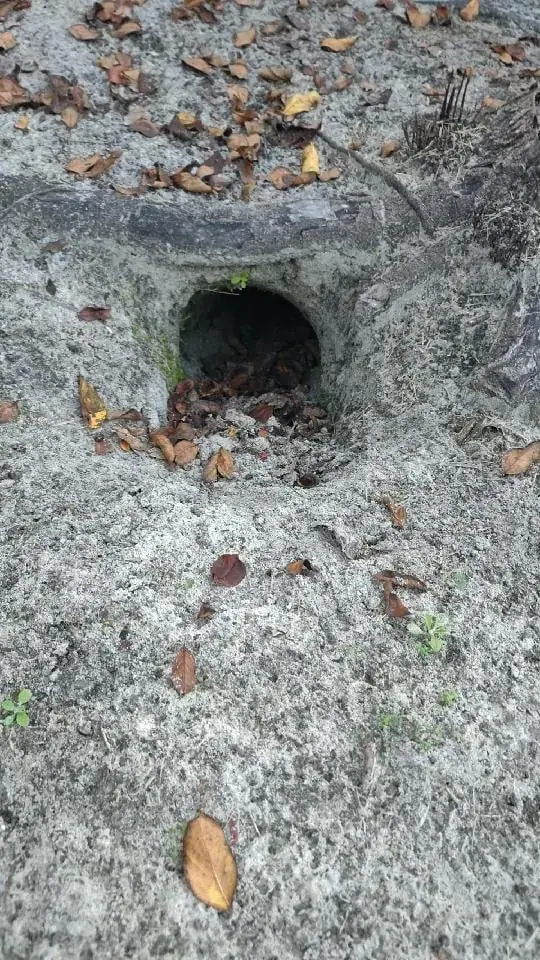
An entrance up to about a foot across, sometimes dug right under a driveway, patio or other structure. FWC says one armadillo can keep several burrows with more than one entrance.
Torn-up flower beds
Mulch thrown out of the beds and plants uprooted. FWC notes moist, fertilized soil draws the earthworms and larvae armadillos hunt.
An armadillo at dusk or after dark
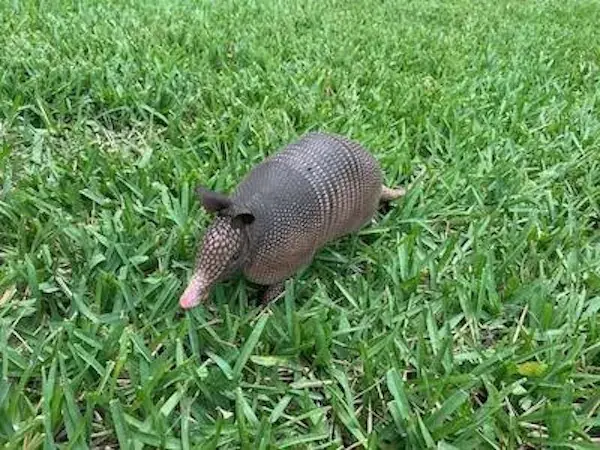
An armored animal about 15 to 17 inches long, not counting the tail, nosing along the ground. Armadillos see poorly, so they may not notice you.
Digging where the soil stays wet
Fresh holes in wet, heavily watered parts of the yard, where worms and larvae come up near the surface.
Cracks or settling
UF/IFAS warns that armadillo burrows under driveways and patios can cause structural damage. A slab that starts to crack or sink near a burrow needs a look.
Why it matters
Why an armadillo by the house is worth dealing with
FWC calls armadillos helpful in one way: they eat large numbers of grubs, spiders, cockroaches and other insects. The trouble is where they dig. UF/IFAS says a single armadillo keeps an average of ten burrows, each up to 7 feet deep and 20 feet long.
- Your slab and driveway. A burrow under a driveway or patio can undermine it, according to UF/IFAS.
- The lawn and beds. Night after night of rooting can wreck sod and landscaping.
- Disease, handled with care. The CDC says some armadillos naturally carry the bacteria that cause leprosy (Hansen's disease), but the risk is very low and most people who come into contact with them are unlikely to get leprosy. As a simple precaution, wear gloves and don't handle armadillos bare-handed.
How we remove armadillos
How we catch an armadillo
Armadillos are hard to bait. UF/IFAS research found they only notice food at very close range, and that where a trap sits matters more than what's in it.
- 1
Find the active burrow
We look for fresh digging and tracks to find the burrow the armadillo is using now, and its travel routes along fences and walls.
- 2
Set traps where it walks
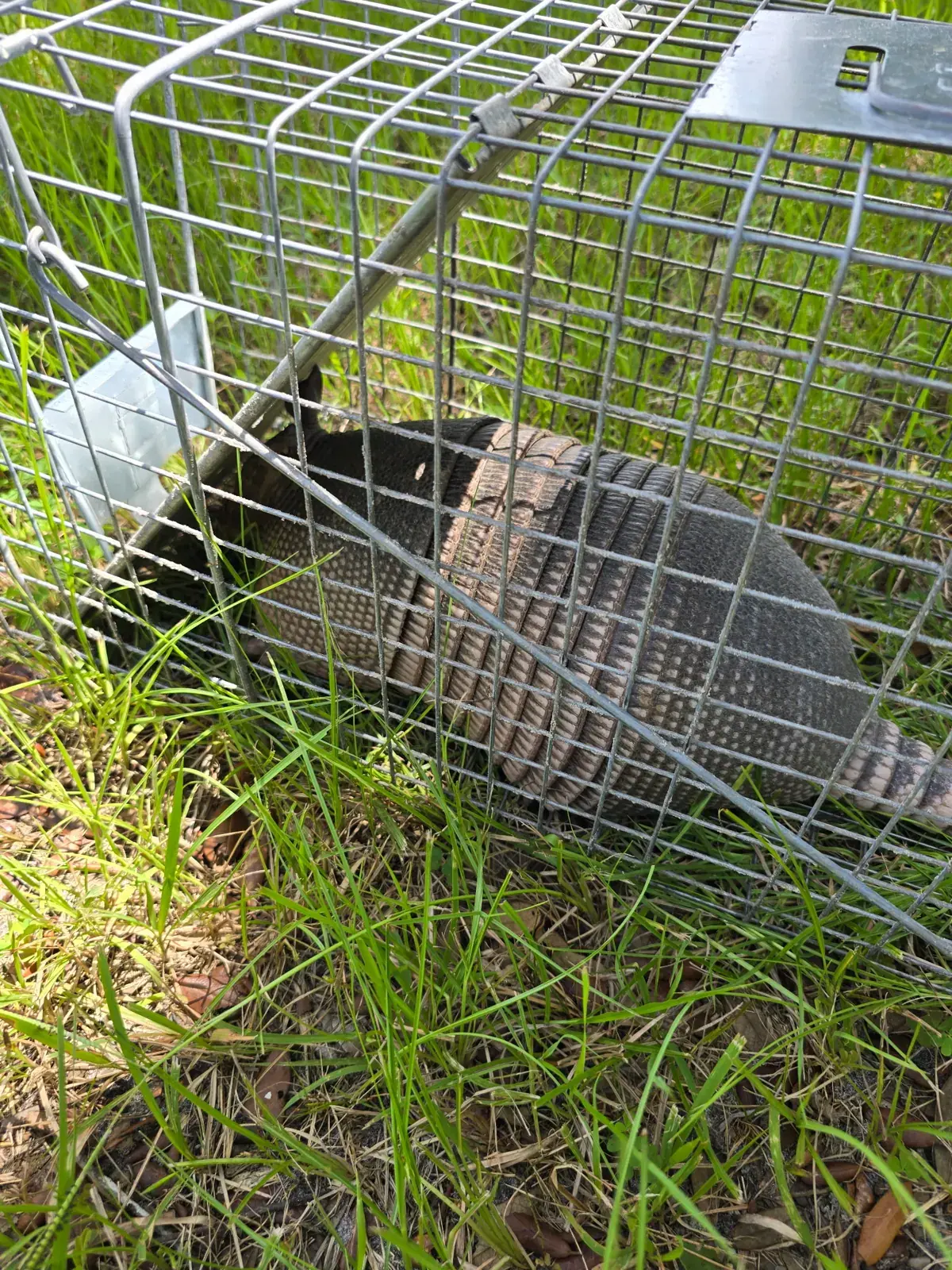
Live traps go at the burrow entrance or along a fence or wall, with boards or fencing to guide the armadillo in. Traps are checked at least every 24 hours.
- 3
Release where the law allows
A caught armadillo may be released on the property, or on 40 contiguous acres or more in the same county with the landowner's written permission. Otherwise it must be humanely put down.
- 4
Close the burrow
Once the armadillo is gone, the burrow is filled. UF/IFAS and FWC recommend buried fencing or wire to stop the next one digging in.
Florida rules
Armadillos and Florida law
- Armadillos are treated as native in Florida. FWC considers them naturalized: they spread here from the southwest. That means they're covered by the nuisance wildlife rule, 68A-9.010.
- Live traps must be checked at least once every 24 hours, and any other animal caught has to be released on the spot.
- Release only on site, or on 40+ contiguous acres in the same county with written permission. On public land, you need the land manager's written permission. FWC adds that relocating armadillos is seldom biologically sound.
- No poison, no repellents. UF/IFAS says poison baits are illegal, and no repellents or fumigants are registered for armadillos in Florida.
- New FWC trapping rules start December 31, 2026. They change trap check times, allow remote (camera) checks, and require most people who trap to complete FWC's annual registration and training, which FWC says is at no cost. A homeowner using one regular-size cage trap (door up to 20 by 28 inches) on their own property, to catch nuisance or non-native wildlife, doesn't need registration, training or reporting. Nuisance animals moved off site must be released or put down within 12 hours of the trap check, down from 24. Details at MyFWC.com/TrappingRules.
Read FWC's Living with Armadillos.
Keep them out
Keeping armadillos from coming back
FWC is clear that removing one armadillo doesn't stop others from using the same yard. The fixes that last change the yard itself.
- Fence small areas at least 2 feet high, buried 18 inches deep
- Chicken wire laid along the patio, driveway or foundation to stop burrowing
- Less watering and fertilizer, and irrigation in the morning so the soil dries
- Fallen fruit picked up: FWC says armadillos like fermenting fruit
- Old burrows filled once the armadillo is out
Cost
What armadillo removal costs depends on
How many armadillos
One animal, or several using the same yard.
Trapping time
Armadillos are slow to trap, so the number of visits varies.
Where the burrow is
Open yard, or under a slab, shed or A/C pad.
Prevention work
The armadillo inspection is free. We quote the trapping before setting a single trap.
Areas served
Armadillo removal in 8 counties
We trap armadillos in all 8 counties, from big Polk County yards to small Pinellas lots.
- Pinellas County
- Clearwater
- Dunedin
- Tarpon Springs
- Hillsborough County
- Brandon
- Plant City
- Lutz
- Carrollwood
- Town 'n' Country
- New Tampa
- Keystone
- Greater Northdale
- New Port Richey
- Land O' Lakes
- Dade City
- Hernando County
- Spring Hill
- Citrus County
- Crystal River
- Lecanto
- Sumter County
- Bushnell
- Ocala
- Dunnellon
- Summerfield
- Lakeland
- Bartow
- St. Petersburg
- Palm Harbor
- Largo
- Pinellas Park
- Tampa
- Riverview
- Odessa
- Westchase
- Citrus Park
- Temple Terrace
- Cheval
- Lake Magdalene
- Pasco County
- Trinity
- Hudson
- Wesley Chapel
- Brooksville
- Weeki Wachee
- Inverness
- Homosassa
- Pine Ridge
- Wildwood
- Marion County
- Belleview
- Silver Springs
- Polk County
- Winter Haven
- Haines City
Reviews
What customers say
- ★★★★★
Pro Wildlife Removal provided the service as written in the proposal. Several animals (squirrel/armadillo) were caught and removed. The roof entry points were blocked as indicated. Antimicrobial treatment in the attic as well.
ER Myers
- ★★★★★
Brandon came out of his way to help remove a raccoon who had decided to use my front door mat for nap. Brandon was very polite and professional. He removed Ralph without issue and pretty quickly.
Cassandra Bronzo
- ★★★★★
There's a first time for everything! Somehow a snake made it's way into our office building and chose my office to hang out. I called Pro Wildlife on Sunday and explained it to the tech. They arranged the appointment to come and remove it for today @ 9am. The tech Zak Brooks arrived and got the snake out very quickly! He was friendly and professional!! Definitely recommend and we'd use them again if needed! Thank you again!
April Daves
FAQ
Armadillo removal questions
Can I get leprosy from an armadillo?
It's possible but very unlikely. The CDC says some armadillos naturally carry the bacteria, but the risk is very low and most people who come into contact with armadillos are unlikely to get leprosy. As a simple precaution, wear gloves if you ever have to touch one.
Why is an armadillo digging up my lawn?
It's hunting. Armadillos dig for grubs, earthworms and insect larvae, and FWC says moist soil and lush, fertilized lawns bring those closer to the surface. Water less, water in the morning, and ease off the fertilizer.
Do armadillo repellents work?
UF/IFAS says no chemical repellents or fumigants are registered for armadillos in Florida, and poison baits are illegal and don't work. FWC suggests shining a bright light into the burrow or putting a radio near it, without blocking the exit, to encourage the animal to move on.
Can I trap the armadillo and move it?
Only to land the rules allow. FWC lets a trapped armadillo be released on the property where it was caught, or on 40 contiguous acres or more in the same county with the owner's written permission, and calls relocation seldom biologically sound. Traps must be checked every 24 hours.
Can an armadillo damage my foundation?
UF/IFAS says burrows under driveways and patios can cause structural damage. If a burrow runs under a slab, get the armadillo out and the burrow filled before it settles. Wire laid along the foundation helps stop new digging.
When do armadillos have babies?
UF/IFAS says armadillos breed in summer but don't give birth until spring. FWC adds that a female has identical quadruplets: one egg splits into four young of the same sex.
Read more
Related guides
Armadillo tearing up the yard?
Call (844) 264-6254. We'll find the burrow and set traps where it walks.
Serving Central Florida: Pasco, Pinellas, Hillsborough, Hernando, Citrus, Sumter, Polk and Marion counties.