BAT REMOVAL AND EXCLUSION
Bat Removal in Central Florida
Bats in the attic, soffit or tile roof, moved out the legal way: one-way doors, then every gap sealed.
- Exclusion, never poison
- Every gap sealed
- Same-Day Service
- Free Inspection
- 4.7 Google Rating
- Same-Day Service
- Free Inspection
- Sealed for Good
How do you get bats out of a house in Florida?
In Florida, bats are removed by exclusion: one-way devices on the exits let the bats fly out at night and stop them coming back, then the openings are sealed. It's legal from August 15 to April 15. Killing, trapping or poisoning bats is illegal. Call (844) 264-6254 for an inspection.
- Exclusion only
- Aug 15 to April 15
- No poison or trapping
- Gaps sealed after
Signs
Signs you have bats
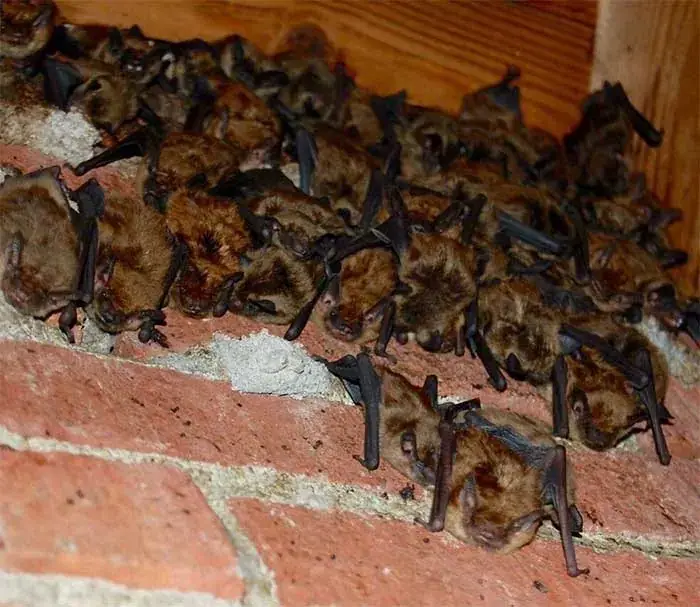
A colony can live in a roof for months before anyone notices. These are the clues, roughly in the order people spot them. More on bats in the attic.
Bats leaving at dusk
Stand outside at sunset and watch the roofline. Bats dropping out of the same gap in a soffit, gable vent or roof tile, one after another, is the clearest sign of a roost.
Droppings below a gap
Bat droppings, called guano, are black and dry. They pile up under the roost and below the openings bats use: on a lanai floor, a windowsill, a pool cage frame or the attic insulation.
Dark smudges at the opening
Bats use the same crack night after night, and the oils and dirt from their fur leave a light brown stain around it.
Rustling at dusk and dawn
Bats leave the roost around dusk and come back around dawn. That's when you're likely to hear light scratching or chirping in a wall or ceiling.
A strong smell
An established roost builds up droppings and urine, and the smell can reach the rooms below. FWC calls it a quality-of-life problem rather than a health hazard, but it doesn't go away until the guano does.
A bat inside the house
One bat in a bedroom may have come in through an open door. Two or more, or one that keeps coming back, points to a roost in the walls or attic.
Why it matters
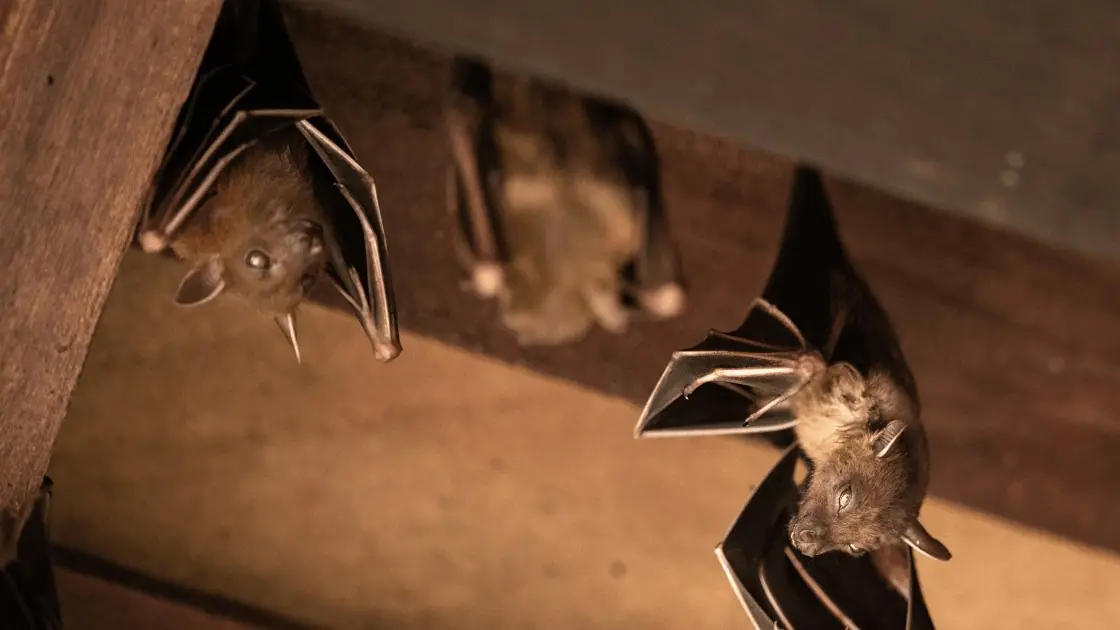
Bats are useful outdoors. Inside your walls, they're a problem.
Florida has 13 resident bat species, and all of them eat night-flying insects. The state protects them for good reason. The trouble starts when a colony moves into a building. Here is what the health agencies actually say, without the scare talk.
- Rabies. Florida's Department of Health names raccoons and bats as the main wildlife sources of rabies in the state. Not all bats carry rabies, but the CDC warns that bat bites can be so small you may not know you were bitten.
- Histoplasmosis. This lung infection comes from a fungus that grows in soil mixed with bird and bat droppings, and people catch it by breathing in the spores. FWC notes that no case from bat guano in a building has been reported in Florida, and the CDC still recommends a respirator in a confined space with guano.
- The house itself. Bats don't chew or tear up a building the way rats and raccoons do. The damage is the guano piling up on the insulation, the stains and the smell.
If you wake up with a bat in the room, or find one near a child or a pet, don't let it go. The CDC says to call your county health department or animal control first so the bat can be tested.
How we remove bats
Bat removal is bat exclusion
Bats can't be trapped and carried off like a raccoon. The colony has to leave on its own and find the door locked behind it. Here is how that works on your house.
- 1
Find every opening
We inspect the whole outside of the building, not just the gap you saw bats use: the roofline, soffits, vents, flashing and tile. Bats only need a small gap. Miss one, and the colony just moves to it.
- 2
Check the calendar
If it's between April 16 and August 14, the pups may not be able to fly yet. We don't exclude in that window. We document the roost, close the openings bats aren't using, and book the exclusion for August 15 or after.
- 3
Install one-way doors
Tubes or netting go on the active exits. Bats leave at dusk to feed and can't get back in. FWC requires the devices to stay up at least four nights, with overnight lows forecast at 50°F or warmer, so the bats are active and actually leave.
- 4
Seal the openings
Once the last bat is out, the devices come down and every opening is sealed. We point out any guano and soiled insulation we saw, so you can plan what happens next.
Florida law
Florida's bat rules, in plain words
- Bats can't be killed. It's illegal under Florida Administrative Code rule 68A-4.001.
- No poison, no pesticides, no fumigants. Rule 68A-9.010 bans pesticides and poisons used to harm, kill or drive off bats, and FWC says fumigants are illegal on bats too.
- No trapping or relocating. FWC says capturing and moving bats is illegal and doesn't work anyway.
- No exclusion in maternity season without a permit. April 16 to August 14 is when most Florida bats give birth and raise their young. April 15 is the last legal day without a permit, and exclusion opens again on August 15.
- Exclusion has to be done right. Devices on the key exits, left up at least four nights, with overnight lows forecast at 50°F or above.
- Don't seal bats in. A bat that can't get out dies inside the wall or attic, and then you have a smell and a second problem.
Read FWC's own page on bats in buildings, or our homeowner's guide to Florida bat laws and bat maternity season guide.
Sealing
After the bats are out
Getting the colony out is half the job. The other half is making sure it can't come back. How much guano is left depends on how long the bats lived there: a few weeks leaves a little on top of the insulation, years can soak it through.
- Every opening bats used, and the gaps next to them, sealed with materials that hold up to Florida weather
- Barrel tile, ridge vents and soffit returns closed where bats can slip under
- Guano and soiled insulation pointed out, so you know what the bats left
Cost
What bat removal costs depends on
Every roof is different, so we price bat jobs after the inspection, before any work starts. These are the things that move the price. For more, see how much bat removal costs in Florida.
How many exits the bats use
Each active exit needs a one-way device, and each other gap needs sealing.
How high and how hard to reach
A single-story ranch is quicker than a two-story house with a steep tile roof.
How long the colony has been there
A new roost leaves little behind. An old one can mean removing the insulation under it.
Roof condition
Rotted fascia, broken soffit panels or cracked tile have to be repaired first, by a contractor the owner arranges.
We inspect for bats free of charge and quote the exclusion before any work begins.
Areas served
Bat removal across Central Florida
We exclude bats from homes, condos and businesses in all 8 counties, all on one number: (844) 264-6254.
- Pinellas County
- Clearwater
- Dunedin
- Tarpon Springs
- Hillsborough County
- Brandon
- Plant City
- Lutz
- Carrollwood
- Town 'n' Country
- New Tampa
- Keystone
- Greater Northdale
- New Port Richey
- Land O' Lakes
- Dade City
- Hernando County
- Spring Hill
- Citrus County
- Crystal River
- Lecanto
- Sumter County
- Bushnell
- Ocala
- Dunnellon
- Summerfield
- Lakeland
- Bartow
- St. Petersburg
- Palm Harbor
- Largo
- Pinellas Park
- Tampa
- Riverview
- Odessa
- Westchase
- Citrus Park
- Temple Terrace
- Cheval
- Lake Magdalene
- Pasco County
- Trinity
- Hudson
- Wesley Chapel
- Brooksville
- Weeki Wachee
- Inverness
- Homosassa
- Pine Ridge
- Wildwood
- Marion County
- Belleview
- Silver Springs
- Polk County
- Winter Haven
- Haines City
Reviews
What customers say
- ★★★★★
Steve did a great job getting rid of the bats we had in our bat house that was attached to our house and sealing it off and our house. I would highly recommend him.
Brandy Casanto
- ★★★★★
Brandon came out of his way to help remove a raccoon who had decided to use my front door mat for nap. Brandon was very polite and professional. He removed Ralph without issue and pretty quickly.
Cassandra Bronzo
- ★★★★★
There's a first time for everything! Somehow a snake made it's way into our office building and chose my office to hang out. I called Pro Wildlife on Sunday and explained it to the tech. They arranged the appointment to come and remove it for today @ 9am. The tech Zak Brooks arrived and got the snake out very quickly! He was friendly and professional!! Definitely recommend and we'd use them again if needed! Thank you again!
April Daves
FAQ
Bat removal questions
Is it legal to remove bats from my house in Florida?
Yes, by exclusion, outside maternity season. From August 15 to April 15, one-way devices can be used to let bats leave and keep them out. Killing, trapping, relocating or poisoning bats is illegal at any time of year.
When is bat maternity season in Florida?
April 16 through August 14. That's when most Florida bats give birth and raise pups that can't fly yet. Excluding the adults then would leave the pups to die inside, so exclusion isn't allowed in that window without an FWC permit.
I have bats in June. What can I do?
Call for an inspection anyway. We can confirm it's bats, find all the openings, seal the ones the bats aren't using and put you first in line for August 15. Keep doors to the attic closed and don't try to block the bats' exit yourself.
Can I just seal the hole the bats use?
Not while bats are inside. FWC warns that bats that don't get out before their exit is sealed die inside the building. Sealing comes after the one-way doors have done their job.
How long does bat exclusion take?
The one-way devices stay up for at least four nights with lows of 50°F or warmer, as FWC requires, and often longer until no bats are left. Then the openings are sealed.
What kind of bats live in Central Florida homes?
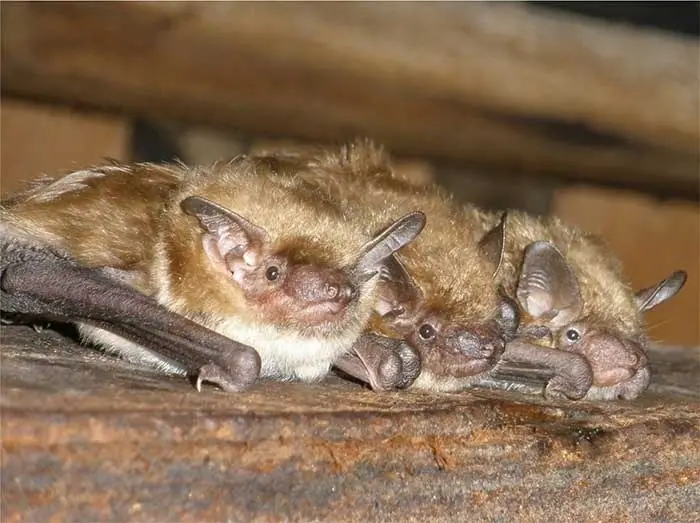
FWC describes the Brazilian free-tailed bat as a bat commonly found in Florida buildings. Evening bats tuck into tight spots too, even the folds of a closed patio umbrella.
There's one bat in my living room. Do I have a colony?
Not necessarily. A single bat can fly in through an open door, and FWC allows one bat in the living space to be removed at any time of year: close it into one room and open a window so it can leave. But if anyone may have touched it, or someone woke up with it in the room, the CDC says to call your county health department before letting it go, so it can be tested. If bats keep showing up, or you see them leave the roof at dusk, there's a roost.
Will a bat house get them out of my attic?
No. FWC says a bat house isn't a substitute for exclusion. But it can help: put one up before the exclusion starts, close to the roost and in the bats' flight path, on a pole or a building rather than a tree, so the colony has somewhere else to go.
Read more
Bat guides
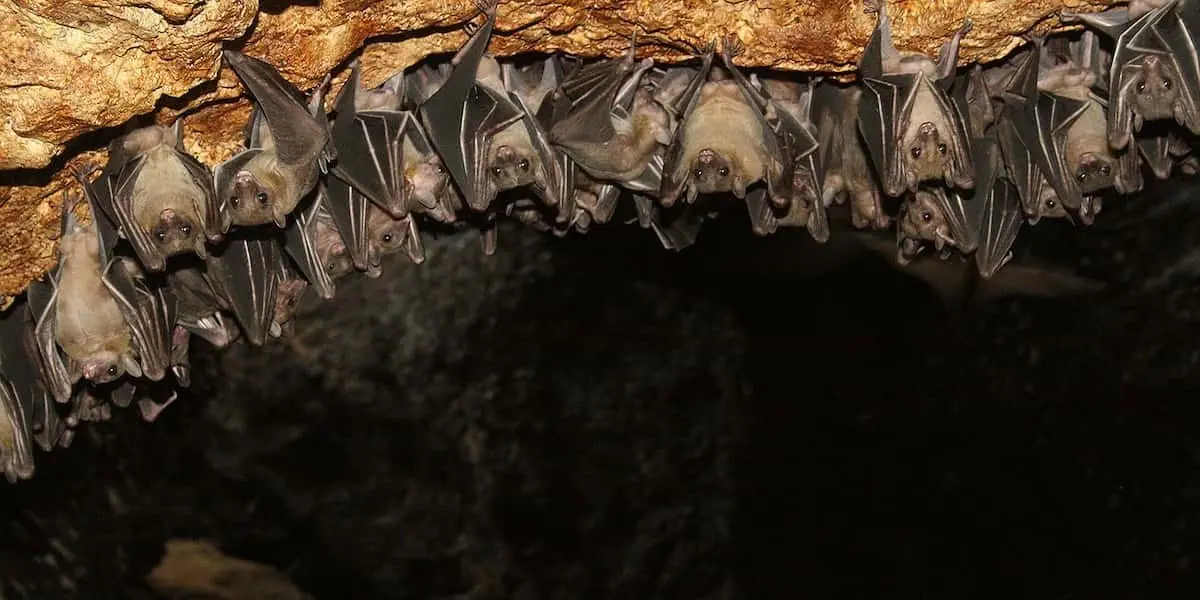 Bats
October 26, 2026
Bats Under Barrel Tile Roofs in Florida: Signs and the Law
Brazilian free-tailed bats roost under barrel roof tiles across Florida. Here's how to tell, why you can't just seal the tiles, and how legal exclusion works.
Read more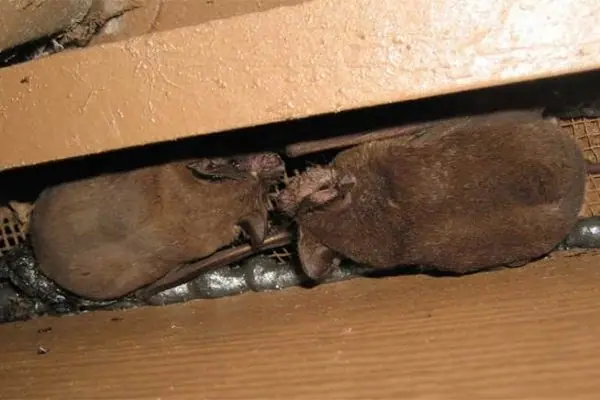 Bats
October 26, 2026
Does Homeowners Insurance Cover Rat or Bat Damage in Florida?
Standard homeowners policies usually exclude damage from rodents and other pests, but policies differ. Here's what the consumer guides say, what to check in your own policy, and Florida's claim deadlines.
Read more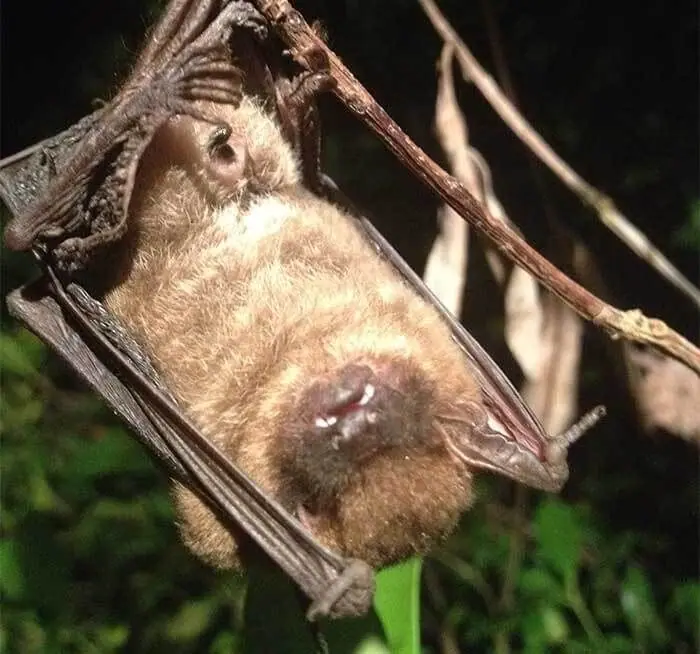 Bats
October 26, 2026
Do Bats Hibernate in Florida? What Bats Do in Winter
Florida's bats don't disappear for the winter. Here's what UF/IFAS and FWC say about bats in the cooler months, why fall and winter are exclusion season, and why a cold snap can pause the work.
Read moreSeeing bats leave your roof at dusk?
Call (844) 264-6254. We'll inspect, tell you what the law allows this month and plan the exclusion.
Serving Central Florida: Pasco, Pinellas, Hillsborough, Hernando, Citrus, Sumter, Polk and Marion counties.