RACCOONS IN THE ATTIC
Raccoons in the Attic in Central Florida
Heavy steps overhead in the evening, a torn soffit, a smell from one corner. Here's how to confirm a raccoon and why the order of the fix matters.
- Evening thumping
- Spring babies
- Latrine safety
- Same-Day Service
- Free Inspection
- 4.7 Google Rating
- Same-Day Service
- Free Inspection
- Sealed for Good
How do I know if a raccoon is in my attic?
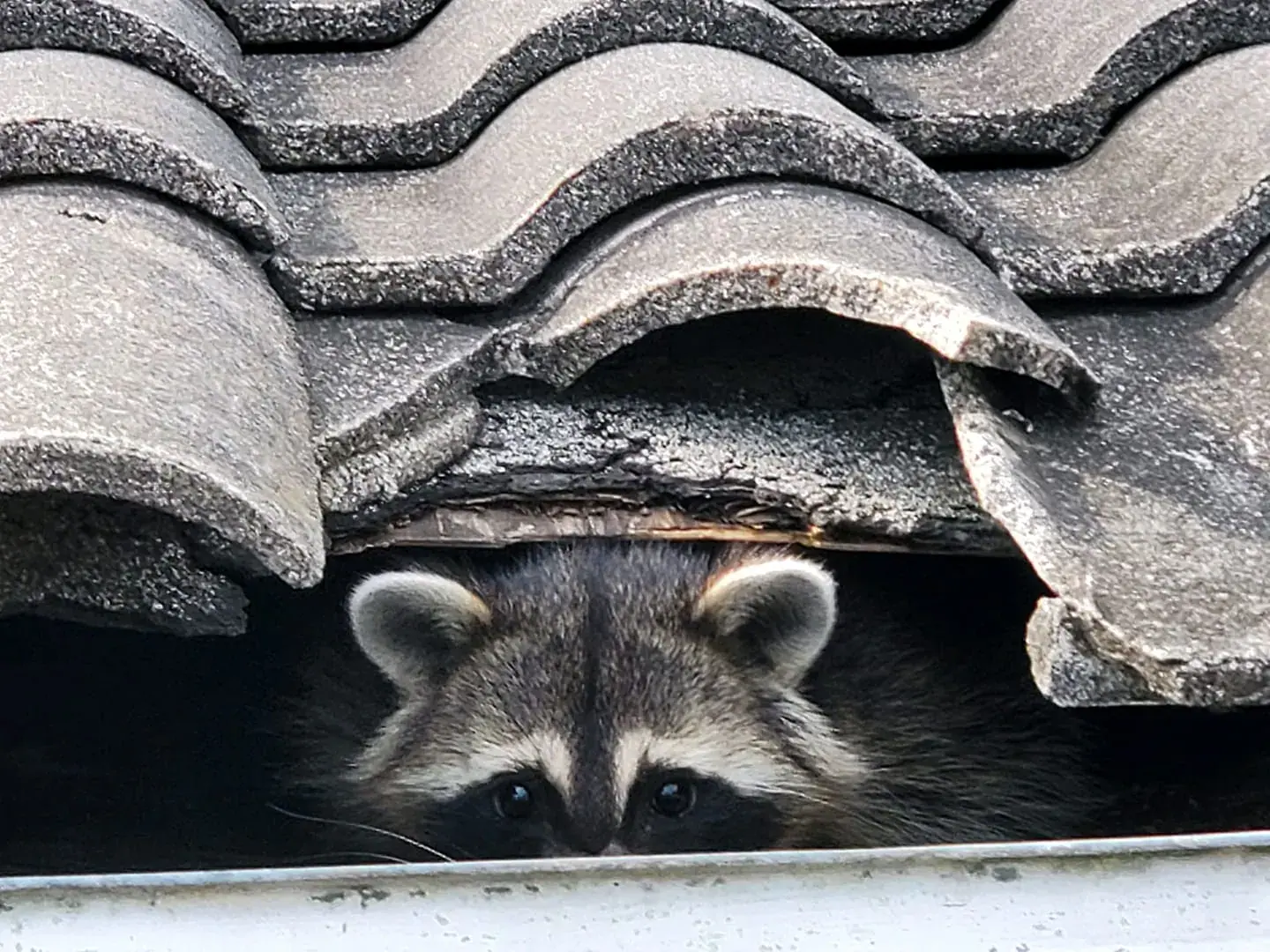
Heavy thumping from dusk through the night, a torn soffit or vent, and a pile of large droppings in one spot point to a raccoon. In March and April, assume a mother with kits. Don't seal the hole while it's inside. See raccoon removal or call (844) 264-6254.
- Heavy evening thumps
- Torn soffit or vent
- Babies in spring
- Don't seal it in
What to check
Signs it's a raccoon up there
Noise from dusk on
UF/IFAS says raccoons usually leave their dens soon after dusk and stay active until morning, so the attic gets loud in the evening and again near dawn.
A torn way in
UF/IFAS lists torn screens, soffits, open chimneys and broken windows as common raccoon entry points. Look for bent or ripped material at the roofline.
Dog-sized droppings in one place
UF/IFAS says raccoon droppings are roughly dog-sized and that raccoons use the same toilet spots, called latrines.
Chirping in spring
UF/IFAS says Florida raccoons are mostly born in March and April. Calls from one spot in the attic in spring usually mean kits.
Listen
A raccoon's night, as heard from below
Late afternoon to dusk
FWC says raccoons usually become active in the late afternoon. Heavy steps toward the entry and a scramble at the roofline as one heads out.
Through the night
Quieter while the adults are out foraging, unless there are kits in the attic waiting for their mother.
Toward morning
UF/IFAS says raccoons stay active until morning. A return trip, more thumping, and settling into the den.
Spring, any hour
Chirping, whimpering and chattering from one spot: kits. Most Florida raccoons are born in March and April.
Raccoon or something else?
Raccoon, rat or squirrel?
When
- Dusk through the night
- Night, most after sunset and before dawn
- Daytime
Sound
- Heavy steps and thumps
- Light scratching and scurrying
- Running and scratching
Size
- 8 to 15 pounds
- Up to a pound
- 17 to 20 inches long, tail included
Way in
- Torn soffit, vent, chimney
- Gaps as small as 1/2 inch
- Damaged soffits, vents, roof tiles
Light scratching at night is more likely rats in the attic. Daytime running is more likely squirrels.
What they do up there
What a raccoon does to an attic
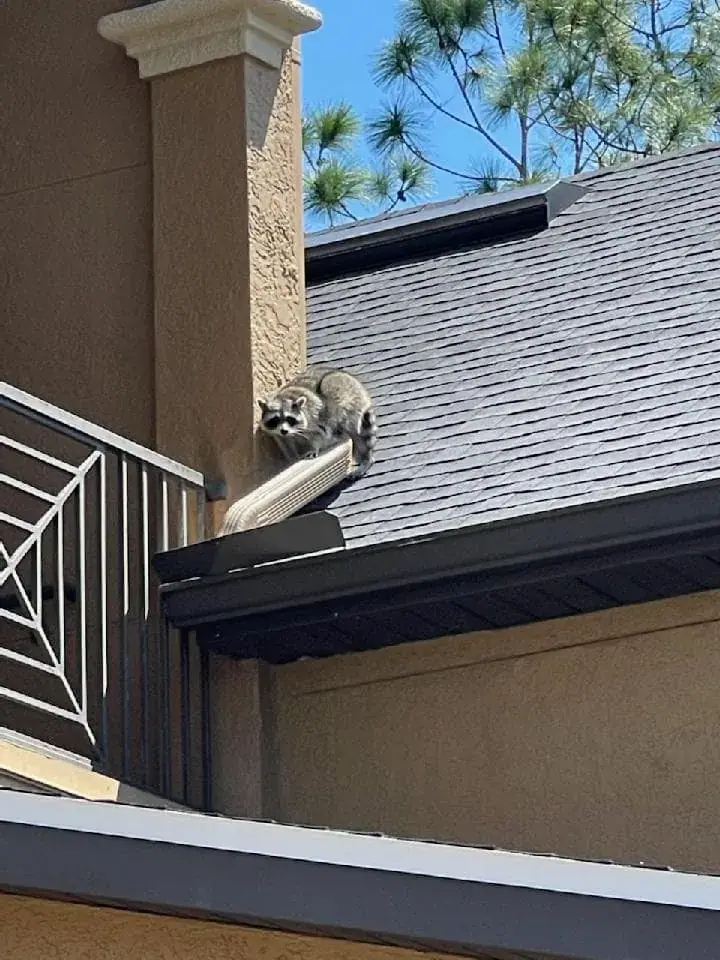
- The way in. UF/IFAS lists torn screens, soffits and open chimneys among common raccoon entries. A hole a raccoon made lets rain into the roof and other animals into the attic.
- Insulation. An 8 to 15 pound animal walking, nesting and raising young crushes insulation flat and soils it, which cuts how well it keeps the heat out.
- The latrine. Raccoons go in the same spot again and again. FWC says raccoon roundworm appears widespread in Florida at low levels, and the CDC says people can be infected by swallowing the eggs by accident.
- Rabies. Florida's Department of Health names raccoons as one of the two main wildlife sources of rabies in the state. UF/IFAS puts exposure in wild raccoons at fewer than 1 in 200. Never corner one.
What not to do
Three mistakes that make it worse
- Sealing the hole while the raccoon is inside. UF/IFAS says chasing a raccoon out and sealing the entry frequently causes even more damage because the raccoon often returns. With kits inside, it also separates the family.
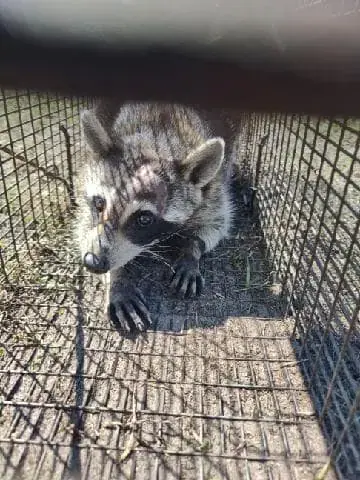
- Moving it yourself. A trapped raccoon may only be released on the same property, or on at least 40 contiguous acres in the same county with the landowner's written permission. FWC's roundworm guidance says not to relocate raccoons at all.
- New FWC trapping rules start December 31, 2026. They change trap check times, allow remote (camera) checks, and require most people who trap to complete FWC's annual registration and training, which FWC says is at no cost. A homeowner using one regular-size cage trap (door up to 20 by 28 inches) on their own property, to catch nuisance or non-native wildlife, doesn't need registration, training or reporting. Nuisance animals moved off site must be released or put down within 12 hours of the trap check, down from 24. Details at MyFWC.com/TrappingRules.
- Cleaning the latrine bare-handed. Raccoon droppings can carry roundworm eggs. FWC advises gloves. FWC and the CDC both say to burn or bury the droppings, and the CDC adds sending them to a landfill.
When it can't wait
Call right away if
A raccoon is in the living space
Get people and pets out of the room, close the door and open an outside door if it's safe. Don't try to corner it.
Kits are crying
Kits crying with no sign of their mother need help fast. Don't climb up to handle them yourself.
A smell from one spot
A strong smell from one area can be the latrine, or an animal that died in the attic. Either way, it needs to come out.
What it usually takes
How a raccoon-in-the-attic job runs
- 1
Inspect for kits
Find the entry, the den and whether young are there before anything else.
- 2
Get the family out
Adults and young removed together, by the method that fits the house and the season.
- 3
Seal the entry
The opening at the soffit, vent or roof edge is sealed, and the chimney capped if needed. Broken wood is a contractor's repair.
- 4
Show you the attic
We point out the latrine and any soiled insulation, so you know what is there.
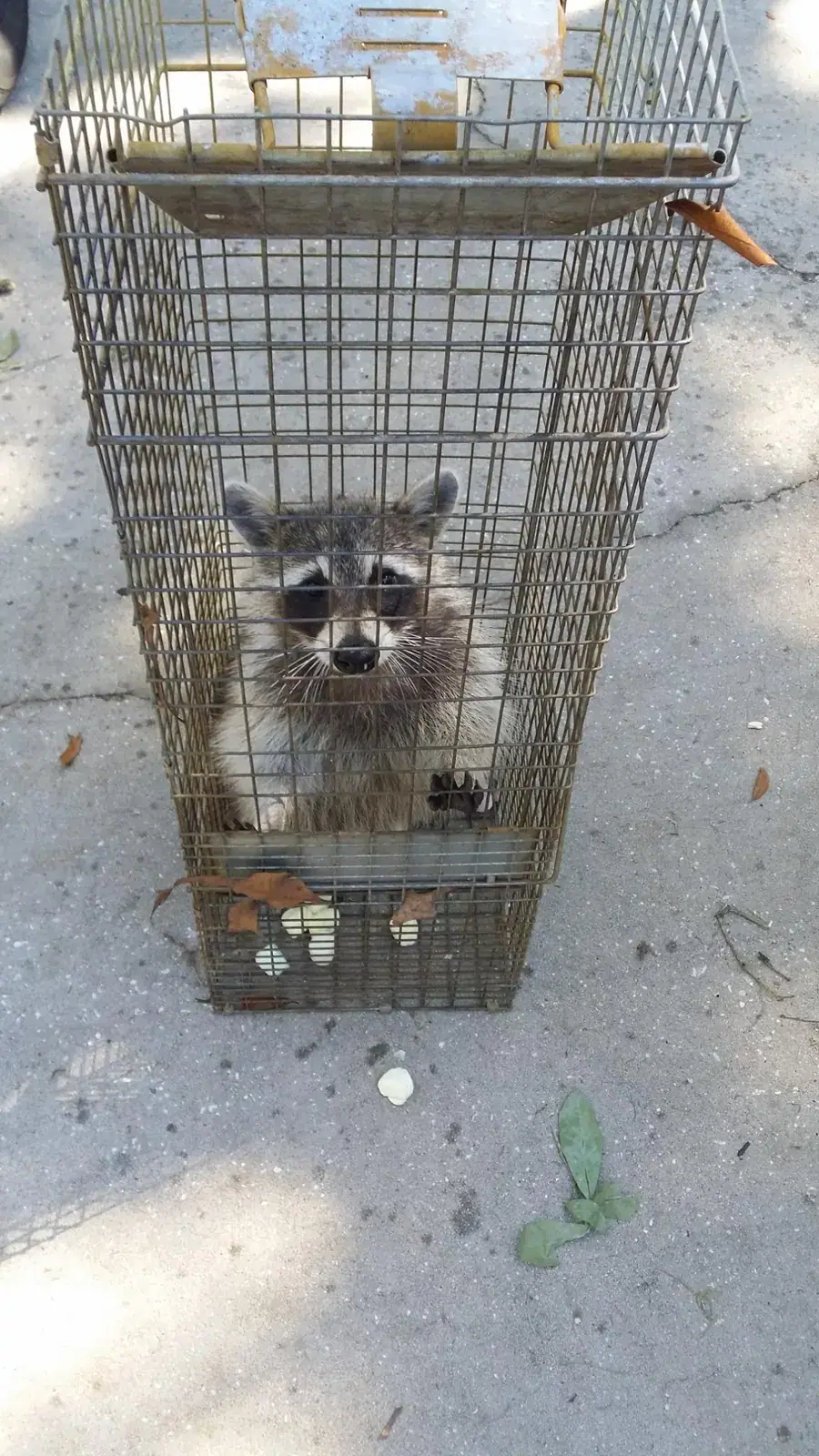
After the raccoons
Raccoon latrines: what to know
With the raccoons out and the entry sealed, the latrine is what's left. The CDC says raccoon roundworm eggs aren't infectious the moment they're passed, and advises removing droppings promptly, before they become infectious. So the latrine comes out first. FWC's advice for a latrine is gloves, and burning or burying the droppings. In an attic, that means bagging the droppings and the soiled insulation around them, then treating the area.
- Latrine located in the inspection
- Crushed and soiled insulation noted in the inspection
- Entry hole sealed, and the chimney capped if they used it
FAQ
Raccoons in the attic: common questions
Why is a raccoon in my attic?
UF/IFAS says raccoons usually den in hollow trees, and where cavities are scarce they use attics and crawl spaces. They get in where an entry point hasn't been kept up or repaired.
Will the raccoon leave on its own?
Sometimes, but a mother with kits stays until they're older, and UF/IFAS notes a raccoon often comes back to a den it knows. Get it out properly and close the way in.
Can I scare it out?
UF/IFAS describes one-way devices for raccoons without young, and for a mother with kits, putting cloth soaked in male raccoon or predator urine near the den so she moves them. These need the family out before anything is sealed. If you're unsure, call us.
The mother is gone and the babies are still up there. What now?
Don't seal anything, and don't handle the kits yourself. Call us. Young left alone in an attic need to be found and taken care of quickly and carefully.
Can I clean up the raccoon droppings myself?
In a yard, FWC and the CDC advise gloves, prompt removal, and burning or burying the droppings or bagging them for the landfill, then washing your hands. In an attic, with insulation and tight spaces, it's safer to have it done.
How do I keep raccoons out of the attic?
Get the entry sealed with strong materials, cap the chimney and keep branches off the roof. Don't put out food or garbage in a way that draws them: Florida rule 68A-4.001 bans doing that when it creates a nuisance. See raccoon removal.
Is a raccoon in the attic dangerous?
Raccoons usually avoid people, but they bite when cornered, and Florida's Department of Health names raccoons as a main wildlife source of rabies. Don't go up into the attic to look for it.
Reviews
What customers say
- ★★★★★
Brandon came out of his way to help remove a raccoon who had decided to use my front door mat for nap. Brandon was very polite and professional. He removed Ralph without issue and pretty quickly.
Cassandra Bronzo
- ★★★★★
There's a first time for everything! Somehow a snake made it's way into our office building and chose my office to hang out. I called Pro Wildlife on Sunday and explained it to the tech. They arranged the appointment to come and remove it for today @ 9am. The tech Zak Brooks arrived and got the snake out very quickly! He was friendly and professional!! Definitely recommend and we'd use them again if needed! Thank you again!
April Daves
- ★★★★★
Josh came out & removed a dead cat from my engine that had been there for over six months! Absolutely no one else would do the job and other places said they couldn’t even find the animal. Josh found it and removed it with ease. I can’t thank him enough!
Allyson Hill
Read more
More on raccoons in homes
RaccoonsOctober 26, 2026
Raccoon Trapping in Florida: Traps, Bait and the Rules
You can live-trap a nuisance raccoon in Florida, but the trap must be checked every 24 hours and the raccoon can only be released on your property or on 40+ contiguous acres in the same county with written permission.
Read more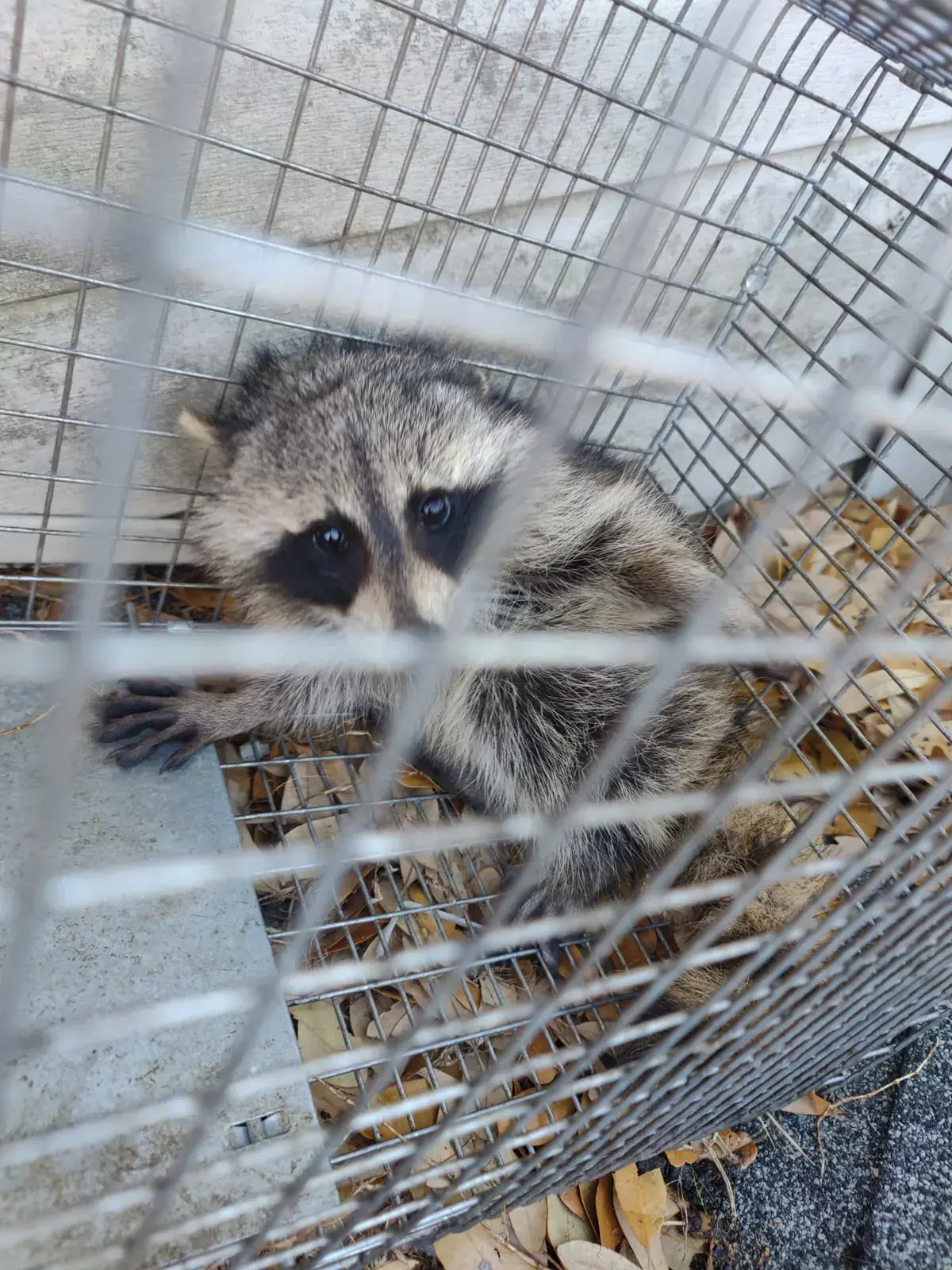 Raccoons
October 26, 2026
Found a Baby Raccoon in Florida? What to Do, and Why You Can't Keep It
A baby raccoon on its own usually isn't an orphan. Here's what FWC says to do, when to call a wildlife rehabilitator, why Florida law won't let you raise it, and what to do if the family is in your attic.
Read more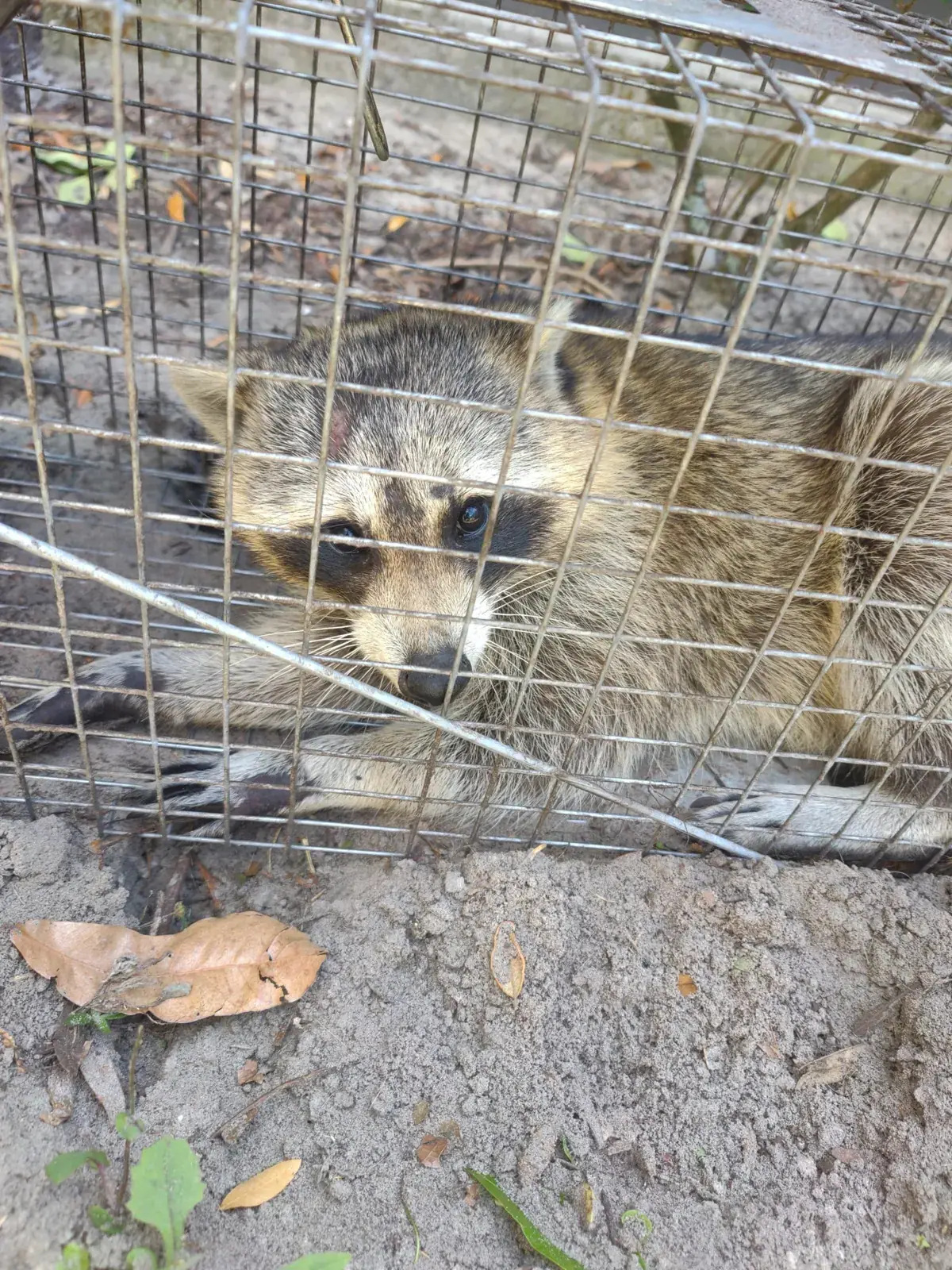 Raccoons
October 21, 2026
Raccoon Mating Season in Florida
If you have heard chittering or found nesting material in a crawl space recently, raccoon mating season in Florida is likely the reason.
Read moreSomething big in the attic?
Call (844) 264-6254. In spring, ask about kits when you call.
Serving Central Florida: Pasco, Pinellas, Hillsborough, Hernando, Citrus, Sumter, Polk and Marion counties.