How Much Does Bat Removal Cost in Florida?
The short answer: bat removal in Florida is priced per house, not per bat. Cost depends on how many openings the colony uses, how hard they are to reach, how long the bats have been there and how much guano has to come out. It starts with an inspection: call (844) 264-6254.
What changes the cost to remove bats from an attic
Bats can't be trapped or poisoned in Florida, so every colony in a building is removed by exclusion: one-way devices on the exits, then sealing. These are the things that make one exclusion cost more than another.
| Factor | Why it changes the price |
|---|---|
| Number of active exits | Each exit the bats use needs a one-way device, and FWC requires the devices to stay up at least four nights. |
| Other gaps on the house | Openings the bats aren't using right now still have to be sealed, or the colony moves to them. |
| Roof height and type | A steep, two-story tile roof takes more time and equipment than a single-story shingle roof. |
| How long the colony has been there | An old roost leaves more guano on the insulation, and sometimes the insulation has to come out. |
| Roof condition | Rotted fascia, loose soffits or cracked tiles need a contractor's repair before they can be sealed. |
| Timing | From April 16 to August 14, exclusion waits unless FWC issues a permit, so the job may be split into an inspection now and exclusion later. |
Why timing matters in Florida
FWC's April 2026 announcement sets bat maternity season at April 16 through August 14. April 15 is the last day to exclude bats without a permit, and exclusion is legal again from August 15. The exclusion itself has rules too: devices on the key exits, left up at least four nights, with overnight lows forecast at 50°F or warmer. (FWC)
Our bat maternity season guide has the full calendar. That doesn't change what an exclusion costs, but it changes when you pay for it. A summer call usually means an inspection and some sealing of gaps the bats aren't using, then the exclusion once the season opens.
What a bat removal job usually includes
- Inspection of the whole roofline and attic to find every opening, the roost and the extent of the guano.
- One-way exclusion devices on the active exits, left up until no bats are left.
- Sealing of every opening once the bats are out.
Doing it yourself versus calling a pro
Florida's rules leave little room for do-it-yourself bat removal. Florida law protects bats: FWC says harming them isn't allowed, poison, relocation and fumigants are illegal to use on bats, and bats sealed inside a building die there (FWC). The savings from a store-bought device disappear fast if a missed opening lets the colony back in, or if bats end up trapped in a wall.
What you can do yourself: watch the roofline at dusk to see where the bats come out, and keep the attic door closed. That information also makes the inspection quicker.
Guano: the part people forget
Guano builds up under the roost for as long as the colony stays. The CDC recommends a respirator in a confined space with bat droppings, and FWC notes that guano in a dry, unused space can usually be left alone. In a used attic, with ductwork and stored belongings, it usually comes out. That can range from a light cleanup to removing all the insulation under the roost.
How to get an accurate quote
Bat quotes vary because houses vary. Ask these questions, of us or anyone else, so you're comparing the same job:
- Does it cover every opening, or only the ones the bats use today? Sealing only the obvious gap just moves the colony.
- When will the exclusion happen? Exclusion between April 16 and August 14 is illegal without an FWC permit. If someone offers it, ask to see the permit.
- How long do the one-way devices stay up? FWC's minimum is four nights with overnight lows forecast at 50°F or warmer.
- Is guano cleanup included, or priced after the bats are out?
- What happens if bats get back in? Ask what the follow-up covers and for how long.
Red flags
- Anyone offering to trap, poison or fumigate bats. FWC says relocation, poison and fumigants are illegal on bats in Florida.
- An exclusion booked in June or July without a permit. That's maternity season, when pups can't fly yet.
- Sealing the holes the same day. Bats that can't get out die inside the building, FWC warns. Sealing comes after the devices have done their job.
Signs you're dealing with a large colony
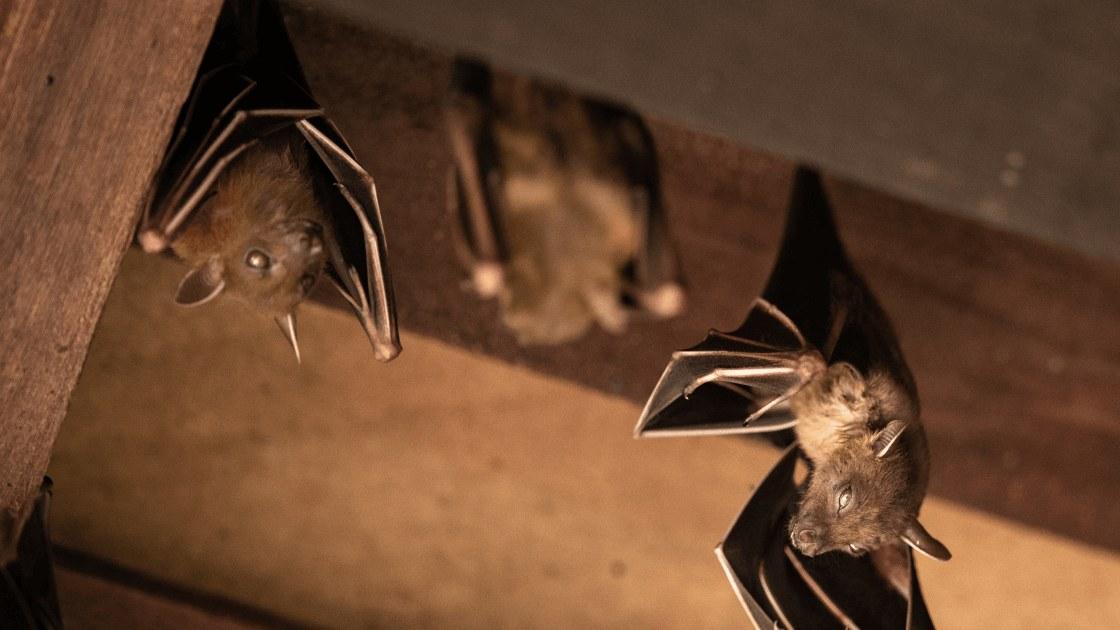
Bigger colonies take longer to clear and leave more guano. FWC's brochure says to look for bats at dusk or dawn as they leave or return, light brown stains around the openings they use, and black, dry guano under the roost. Many bats leaving several gaps at sunset, or a deep pile of guano on the insulation, usually means a bigger job. Florida has 13 resident bat species, and FWC describes the Brazilian free-tailed bat as common in buildings.
Ways to keep the cost down
- Call early. A young roost leaves less guano behind than one that has been there for years.
- Plan around the calendar. Book the inspection in spring or summer so the exclusion can start soon after August 15.
- Don't block the exits yourself. Trapped bats mean dead bats in the walls and a second bill for odor and dead animal removal.
- Put up a bat house before the exclusion. FWC suggests one close to the roost, in the bats' flight path, on a pole or building. It doesn't replace exclusion, but gives the colony somewhere to go.
Read more on our bat removal and bats in the attic pages, see Florida's trapping rules for the other animals, or call (844) 264-6254. We exclude bats across Pinellas, Hillsborough and seven more counties.