Raccoon vs Rats in the Attic: How to Tell the Difference
- Pro Wildlife Removal
- Blog
Raccoon in the Attic vs Rats in the Attic: How to Tell the Difference
If you suspect a raccoon in the attic vs rats in the attic, the sounds, droppings, and damage tell very different stories. If you want professional help, start with our professional wildlife removal services to get an inspection and a removal plan tailored to your home. This guide compares the two pests step by step, shows examples and costs, and pulls examples from real homeowner reports on community forums so you know what to expect.
Why accurate identification matters
Misidentifying attic wildlife wastes time and money. A raccoon family can cause structural damage, contaminated insulation, and parasites that require professional cleanup. Rodents reproduce quickly and create chronic contamination and fire risk from chewed wiring. The health risks are real: the Centers for Disease Control explains that rodent droppings can expose people to hantavirus, while raccoon feces can carry Baylisascaris roundworms, which cause serious illness in humans (CDC on hantavirus, CDC on Baylisascaris).
Main differences at a glance
Below is a compact comparison you can use as a checklist when deciding whether you are dealing with a raccoon or rats.
| Feature | Raccoon | Rat |
|---|---|---|
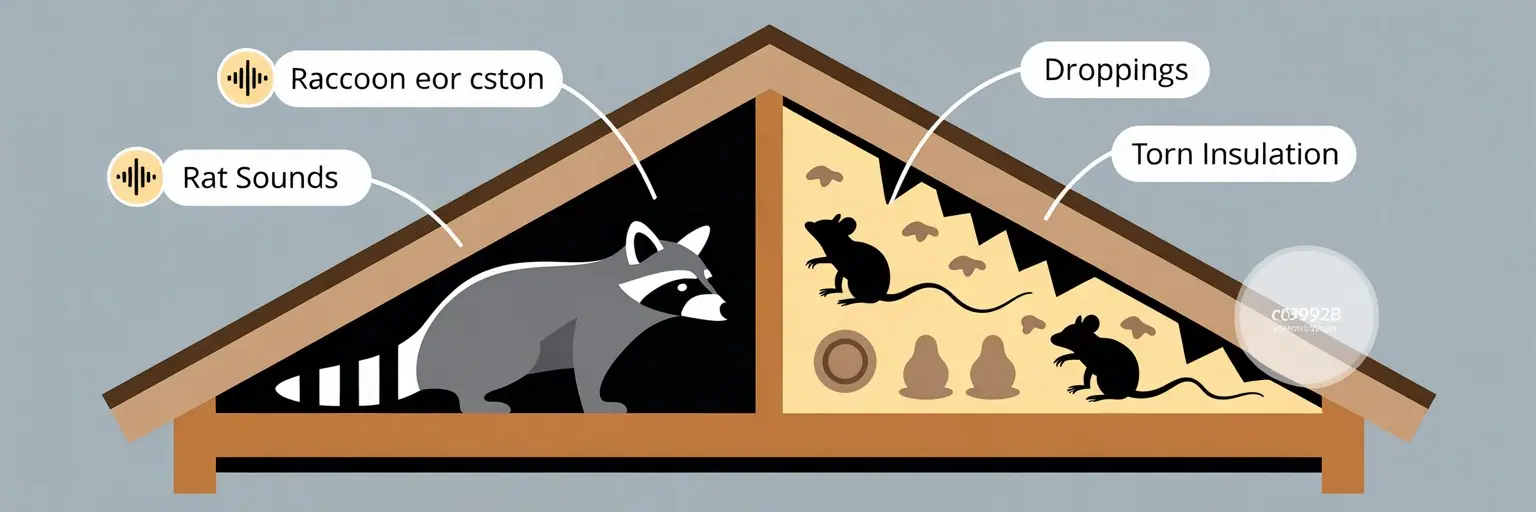
| Typical noise | Heavy thumps, dragging, scraping, kits vocalizing at dawn and dusk | High-pitched scratching, scurrying, constant night-time activity |
| Droppings | Larger tubular droppings, sometimes containing seeds or fur | Small pellet-shaped droppings, uniform size for species |
| Damage pattern | Torn insulation, roof/soffit damage, large entry holes | Gnawed wiring and framing, small entry gaps, nesting in insulation |
| Smell | Strong musky odor from urine and decomposing food | Ammonia-like odor in heavy infestations |
| Visible tracks | Footprints with distinct finger marks in dusty areas | Small footprints and tail drag marks |
How noises help you decide
Sounds are the single most useful early clue. Homeowners on community forums routinely report distinct audio patterns. One user described noises “way louder than what a mouse could be making,” with heavy walking and objects moving several feet, which matched raccoon activity. Another homeowner mistook loud scratching for a bigger animal only to find a trapped squirrel; this shows how easy misidentification is if you rely on just one cue.
- Raccoons: Listen for heavy thuds, dragging, knocking and occasional vocalizations at dawn or dusk. Adults and kits moving together create intermittent but loud noises.
- Rats: Expect constant scratching and scurrying at night, sometimes a faint gnawing that sounds like plastic or paper being chewed.
Droppings and contamination: visual clues
Examining droppings without touching them gives clear evidence. Rat droppings are small, dark, and pellet shaped. Raccoon droppings are larger and can be tubular and segmented. Both can contaminate insulation and framing and require careful cleanup by trained technicians. For clear visual guides, pest control providers maintain photo libraries you can check, such as Orkin’s rat pictures and droppings guide (Orkin).
Damage patterns and what they cost
Raccoons create larger entry points and tear insulation for nesting. A Reddit user who found a raccoon family had matted insulation and was quoted repair estimates in two ranges: full removal, sanitization and re-blow at about $6 per square foot versus simply adding new insulation over the matted material at around $3 per square foot. That user decided based on the extent of contamination and whether access points were fully sealed.
Rats cause ongoing gnaw damage that often shows up as chewed wires, small holes in eaves, and frayed ducting. Wiring repairs can run from a few hundred dollars to thousands if an electrician has to rewire large sections. For any suspected electrical chewing, call a licensed electrician and a wildlife professional immediately because chewed wires are a fire hazard.
When secondary pests appear
Secondary infestations are common. One homeowner posted about fleas and intense bites after an animal accessed roof spaces. The timeline showed fleas spreading fast across indoor pets and people after an animal had been in the attic. That homeowner eventually found a raccoon in a trap on the roof and linked the flea problem to that wildlife incident. Expect fleas, ticks, mites, and other parasites with larger mammals, while rodents bring fleas and mites too. Professional cleanup often includes pest treatment and sanitation.
Step-by-step: safe inspection and next actions
Do not enter the attic without gloves and a mask. If you smell strong urine or think an animal has died, leave the area and call professionals. Here is a practical inspection workflow you can follow safely.
- Listen at night and at dawn to collect sound evidence. Note timing and rhythm.
- Look for droppings along attic joists or in access points. Photograph but do not handle.
- Check exterior: torn vents, missing shingles, displaced soffits, and small gnaw holes.
- If you see large entry damage or hear heavy movement, assume raccoons or squirrels and call wildlife removal. For small gaps and gnawing, call rodent control.
- For droppings contamination, plan for professional sanitation and insulation assessment. Refer to our pricing discussion below and to our how much does wildlife removal cost post for more details.
Quick cost comparison table
| Service | Typical cost range | Notes |
|---|---|---|
| Raccoon removal and exclusion | $300 to $1,200 | Depends on access repairs and number of animals |
| Full attic insulation removal and sanitization | $1,000 to $4,000 | Reduces long-term contamination risk; Reddit examples showed $6/sqft as a real quote |
| Rat trapping and rodent exclusion | $200 to $800 | Follow-up sanitation and baiting may add costs |
| Electrical repairs from chewed wiring | $300 to $3,000+ | Cost varies widely by extent; consult a licensed electrician |
DIY vs professional removal: what the data and forums say
Homeowner threads show a recurring pattern. Small rodent problems sometimes respond to DIY traps and sealing. Larger problems, raccoon families, or evidence of contamination require professional removal. One homeowner trapped a raccoon on the roof while another tried pipe traps that were moved several feet; professionals were the only ones who retrieved animals safely and repaired entry points. Professionals bring legal compliance, humane handling, guaranteed exclusion, and proper sanitation.
Health guidance supports professional cleanup for biological hazards. The CDC and other agencies warn against homeowners handling droppings or contaminated insulation themselves because of disease risks from spores and parasites. For contaminated attics call a wildlife or pest control professional who offers sanitary removal and insulation replacement.
Internal resources and next steps
If you need help identifying signs of rats specifically, our guide on signs that your house has rats has clear photos and inspection tips. For raccoon-specific behavior and safe handling options, see our post what to do about raccoons. If you want a cost estimate and a site visit, schedule a professional inspection through our wildlife removal services page and we will prioritize safety and exclusion work first.
Frequently Asked Questions
Does that noise sound like raccoons or rats?
Raccoons sound heavier and more deliberate; you may hear thumps or dragging and occasional vocalizations at dawn or dusk. Rats create continuous high-pitched scratching and scurrying noises, mostly at night. If you are unsure, record a short audio clip on your phone and share it with a wildlife professional for identification.
Can raccoons cause fleas or other pests inside the house?
Yes. Raccoons frequently carry fleas, ticks, and mites. One homeowner reported severe flea bites across occupants after an attic intruder was active for weeks. Professional removal includes parasite control and sanitation to stop the secondary infestation.
How can I tell raccoon droppings from rat droppings?
Raccoon droppings are larger and contain visible food remnants like seeds or fur. Rat droppings are small, uniform, and pellet shaped. Photograph droppings and avoid handling them. If you see mixed sizes, assume multiple species or a large animal and call professionals.
How much will repairs cost if a raccoon nests in my attic?
Costs vary. A Reddit thread showed a real quote of about $6 per square foot to remove soiled insulation, sanitize, and re-blow new insulation. Adding new insulation over matted material was quoted near $3 per square foot in that discussion. Structural repairs and vent or soffit replacement add to the total.
Are rats likely to chew through electrical wiring?
Yes. Rats and mice chew continually to control tooth growth and often gnaw wiring insulation. That creates a fire risk. If you find chewed wiring, stop using the affected circuits and call an electrician and pest professional immediately.
What are the health risks from attic contamination?
Attic contamination can expose you to bacterial and fungal pathogens, parasites, and airborne spores such as those that cause hantavirus or histoplasmosis. Raccoon feces may contain Baylisascaris larvae. Professionals wear respirators and use containment procedures during cleanup to avoid exposure.
Conclusion
Distinguishing a raccoon in the attic vs rats in the attic comes down to listening to the noise pattern, inspecting droppings and damage, and considering secondary signs like fleas or matted insulation. Community reports confirm that heavy, intermittent thumping and torn insulation usually point to raccoons, while constant scratching and small pellet droppings point to rats. When in doubt, get a professional inspection. If you want an expert assessment and a humane, code-compliant plan, schedule an inspection through our wildlife removal services and we will prioritize safety, exclusion, and repair.
If you hear unusual attic noises tonight, photograph or record what you can, then contact our team for a fast inspection and an onsite quote. Early action saves thousands in repairs and reduces health risks.